

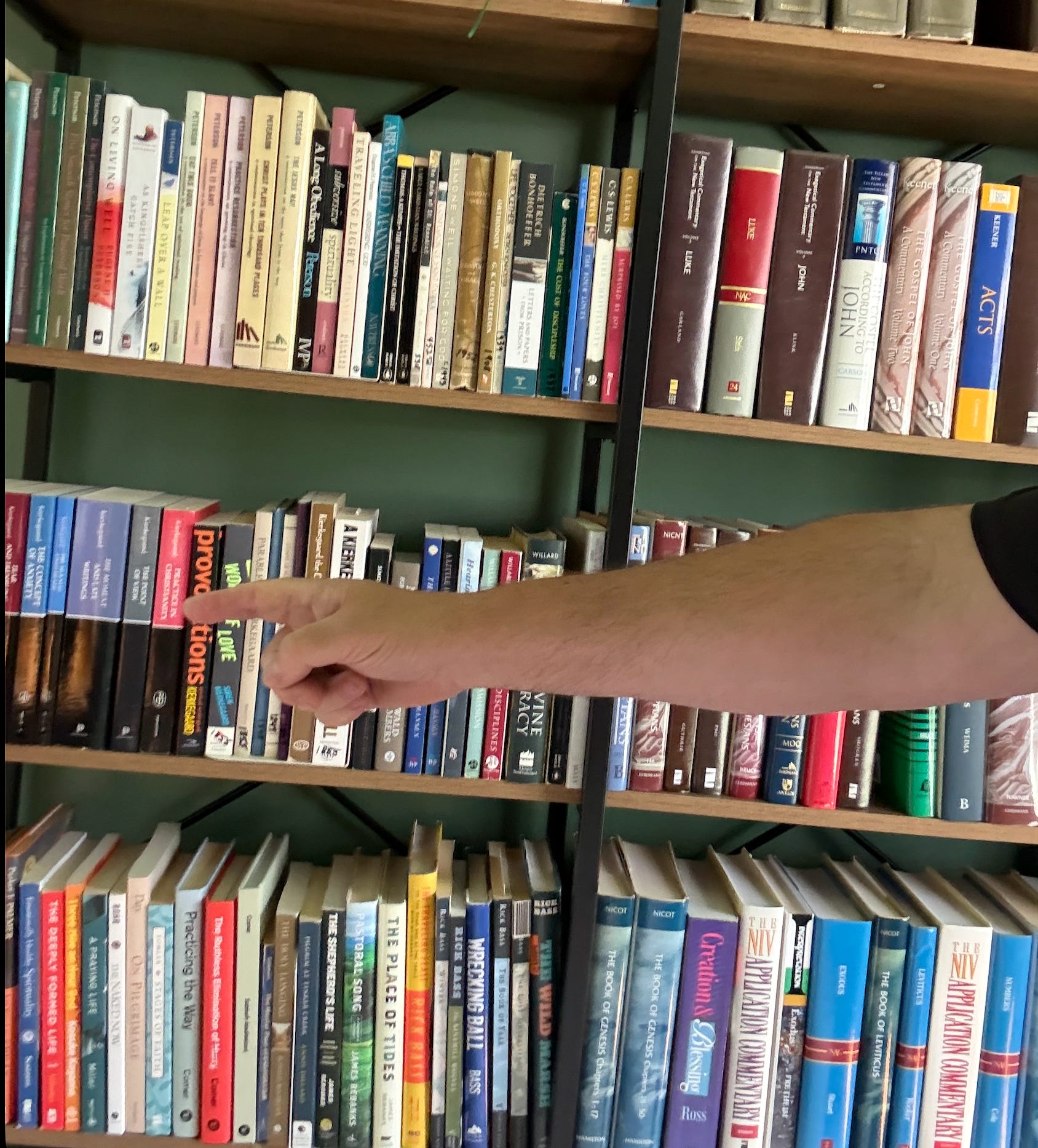
Lately I’ve been violently throwing Christian books in the trash.
Not every book.
But enough to make you think I’m a lunatic.
FYI—the key to launching a Christian book across your bedroom and hitting the trash can on the first try is to throw it like a Frisbee.
Grab the bottom right corner, spin it clockwise, and watch it soar through the air like a missile.
WARNING: do not try to shot-put it toward the trash like a freshly baked cake.
That technique can knock the head off your wife’s Precious Moments figurine—the one she’s had since fourth grade.
Then you have to superglue it back together.
And hope she doesn’t read about it in your newsletter. 😊
Here’s my problem with many Christian books I’ve read lately: they assume the worst about the reader.
They assume most Christians are shallow.
Uncommitted.
Self-centered.
Soft.
And that what we really need is to have “our hair blown back” by the bare-knuckled teachings of Jesus and jolted back onto a one-way path to suffering and martyrdom.
To be honest, I’ve thought this on occasion.
But there’s a problem with that approach.
Bad Fruit?
In Matthew 7, near the end of Jesus’ Sermon on the Mount, he said,
“Watch out for false prophets…by their fruit you will recognize them.”
But what did Jesus mean by “fruit”?
Fruit is what a person’s life, tone, habits, and teaching produce over time.
Fruit is not crowds. Not clicks. Not books sold. Not a thirty-second clip that makes everyone in the comments say, “Amen.”
What we should be asking is does their teaching make people more like Jesus?
More humble?
More honest?
More courageous?
More merciful?
Want to know the secret to spotting good fruit in a Christian’s life?
Give them time.
Years reveal what minutes cannot.
The Prophet of Copenhagen
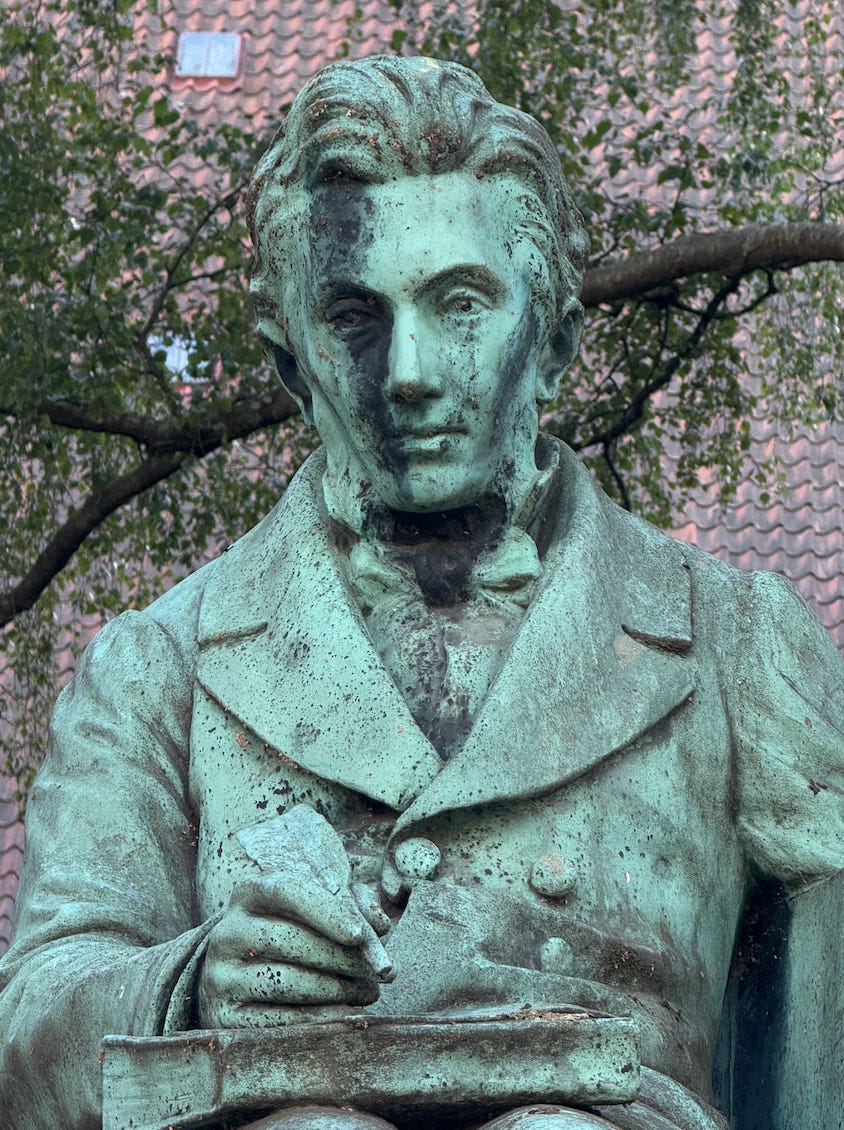
The writings of Søren Kierkegaard have had a profound impact on my life.
So much so, that last year Lisa and I flew to Copenhagen to study his life and tour the city he loved.
I left conflicted.
On one hand, Kierkegaard’s writings on discipleship galvanized my resolve to suffer for the message of Jesus.
He could be surgical. For instance, Kierkegaard once contrasted Christ and the clergy this way:
Christ says,
“Sell all that you have and give it to the poor.”
The priest says,
“Sell all that you have and give it to me.”
That’s a line you don’t forget.
However, halfway through the tour, my confidence in his message began to wobble.
Here’s what I learned:
Kierkegaard lived off a large inheritance from his father.
He lived in a four-story brick home with seven rooms, two kitchens, and an elaborately decorated first floor.
He had a house cleaner and cook named Anders who stayed with him for much of his life.
Because of his wealth, Soren was able to…
Walk the streets of Copenhagen at leisure.
Eat out in restaurants whenever he liked.
Smoke cigars and write in cafés.
Attend the theater.
He became a fixture in Copenhagen’s educated bourgeois social circles.
That’s not exactly what I expected from the prophet who railed against comfortable Christians.
Online Prophets
Which brings me back to Jesus’ warning:
“By their fruit you will know them.”
This was true in the first century, in 19th-century Copenhagen, and it’s still true today, especially online.
A lot of Bible teaching today seems less interested in forming people and more interested in shaming them.
Hot takes.
Public rebukes.
Demeaning captions.
Thirty-second clips designed to make tired Christians feel like failures before they even have a chance to listen.
And I understand the impulse.
There are lies that need naming.
False teachers, shallow discipleship, and comfortable Christianity deserve critique.
But Jesus never told us to evaluate teachers by the heat of their delivery.
He told us to evaluate them by their fruit.
Had Kierkegaard said…
“Friends, I struggle with the teachings of Jesus on wealth and sacrifice just as much as anyone. I know each person has to determine how they should spend their money, but let’s help each other figure this out. Let’s encourage each other. And please pray for me. I’m not yet where I want to be.”
…then I would have left Copenhagen with much more respect for him.
Instead, I will always remember how easy it was for him to condemn in others the very lifestyle he enjoyed.
That is why, in a time of likes, clicks, and platforming people we do not know, we must remember that time matters.
Time helps us see what is almost impossible to discern online, in the moment, or under the lights.
And most important: we must never forget that history has taught us, again and again, that the most bombastically prophetic among us often turn out, with hindsight, to be the ones who needed rebuke the most.
And have their books thrown into the trash.
Like a Frisbee.
Great reminder of what it is like to follow the risen Savior. I'll be looking more closely for fruits and be alert to dodge frisbee-like books tossed in my direction. <><